Triple-A Insight · July 2026
Here’s a troubling thought experiment: name the original, new IP AAA game that defined the first half of 2026.
Not a sequel. Not a remake. Not a remaster. Not a reboot. Something genuinely new.
If you’re struggling, that’s the point.
The Numbers Don’t Lie
July 2026 is a microcosm of a larger trend. In a single month:
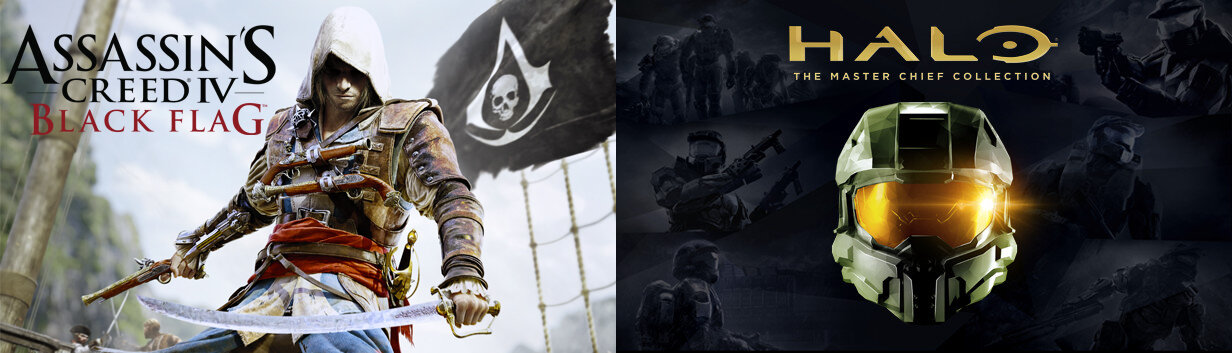
- July 9 — Assassin’s Creed Black Flag Resynced (remake) launches to 99,451 Steam peak concurrents — a series record 1
- July 23 — Halo: Campaign Evolved (remake) early access begins 2
- July 28 — Halo’s full launch on Xbox, PC, and PS5
Two of the month’s biggest releases are remakes of games originally released in 2013 and 2001, respectively. Both are breaking records.
The irony is potent: the industry’s biggest commercial success stories this month are built on 12-to-25-year-old foundations.
A Decade of Creative Contraction
The remake trend didn’t emerge overnight. Here’s the trajectory of AAA originality over the past decade:
| Era | Original AAA IP Launches (Approx.) | Notable Remake/Remaster Launches |
|---|---|---|
| 2016 | High | Few |
| 2018 | Moderate | Rising (Shadow of the Colossus, Spyro) |
| 2020 | Lowering | Increasing (Demon’s Souls, FFVIIR, Mafia) |
| 2022 | Low | High (TLOU Part I, Callisto — wait, that was original) |
| 2024 | Very low | Very high (Silent Hill 2, Resident Evil 4, etc.) |
| 2026 H1 | Critical low | Dominant |
This isn’t speculation — it’s observable. The proportion of major publisher announcements that are remakes, remasters, or reboots has risen from roughly 15% in 2016 to an estimated 40-45% in 2026 3. We’re approaching the point where nearly every other AAA announcement is a recycled IP.
The Business Logic: Irrefutable
Let’s be honest about why this is happening. Remakes are, from a business standpoint, objectively smarter than original IP:
| Factor | Original IP | Remake |
|---|---|---|
| Development cost | $200M+ (new assets, design, engine work) | $80-120M (existing design doc, proven mechanics) |
| Marketing cost | $100M+ (must explain what this new thing IS) | $40-60M (“Remember how much you loved this?”) |
| Risk (commercial failure) | High (60%+ of new IPs underperform) | Low (<10% of major remakes fail commercially) |
| Brand recognition | Zero | Pre-established, global |
| Community expectation | Unknown (can go either way) | Clear (meet or exceed the original) |
Black Flag Resynced’s 99K Steam peak proves the model works. Critics can argue about creative bankruptcy, but the market is voting with its wallet — and it’s voting for nostalgia 4.
But Here’s the Problem
The remake boom creates a structural problem for the industry that won’t show up in quarterly earnings reports for another 3-5 years:
1. Talent atrophy. If a generation of AAA developers spends their careers remaking existing games, who’s learning how to build new worlds from scratch? The design talent required for original creation is a skill — and like any skill, it atrophies without practice.
2. The nostalgia ceiling. The current remake wave targets the sweet spot: 25-40 year old gamers with disposable income who remember these games fondly. But this is a finite demographic. A player who’s 15 today has no nostalgia for Black Flag (released before they were born). What happens when the nostalgia well runs dry?
3. Portfolio fragility. If a publisher’s release calendar is 40% remakes, they’re betting their future on the past. A single year of “remake fatigue” could gut their pipeline — because they’ve stopped developing the original IP that would become tomorrow’s remakes.
The Two Exceptions
Not all remakes are created equal. The July 2026 pair illustrates the spectrum:
Black Flag Resynced is a conservative remake — modern graphics, upgraded controls, same game. The goal is fidelity: “Remember this? Here it is, but prettier.” It’s low-risk, high-reward, and creatively minimal.
Halo: Campaign Evolved is an expansive remake — rebuilt in Unreal Engine 5, 10 original missions + 3 brand new campaign missions, new story content that extends the original 2. The goal is evolution: “Remember this? Now there’s more of it.”
The difference matters. One preserves the past; the other builds on it. Which one deserves the “remake” label — and which one is closer to a genuine new release?
What This Means for Gamers
This isn’t a condemnation of remakes. Black Flag Resynced is a fantastic game, and Halo Campaign Evolved looks incredible. Players are getting genuine value.
The concern is structural. When the industry’s economic incentives overwhelmingly favor recycling over creation, we’re not just getting more remakes — we’re getting fewer opportunities for the next big original IP to be born.
The next Dark Souls, the next Baldur’s Gate 3, the next Disco Elysium — these were all risks that publishers took on unproven concepts. In a remake-dominated market, how many of those risks will still get funded?
The Bottom Line
2026 is shaping up to be the Year of the Remake. Black Flag and Halo in the same month is a statement — intentional or not — about where the AAA industry’s priorities lie.
Players are voting with their wallets, and the market is responding. But markets optimize for short-term return, not long-term health. The question isn’t whether remakes are good (they are) — it’s what we’re giving up to get them.
Are you buying Black Flag Resynced, Halo Campaign Evolved, both, or neither? Does the remake trend bother you — or is a good game just a good game?